-
AHRI certified reference number
The Air Conditioning, Heating, and Refrigeration Institute (AHRI) certifies heat pump system efficiency. The AHRI number is a unique ID for heat pump and furnace components that were tested as one system. It is a rating of the efficiency of the complete system. If any component of your heat pump system changes, the system will have a different AHRI reference number.
An AHRI reference number is required when you apply for air source heat pump rebates. The AHRI reference number for your heat pump system must be on the Qualifying Product List. Your contractor must also include the AHRI reference number for your heat pump system, including all components of the system, on your invoice.
-
Air-to-water heat pump
An air-to-water (hydronic) heat pump system relies on heated and cooled water. Air-water systems are most suitable for new construction or for homes with an existing boiler and radiant heating system.
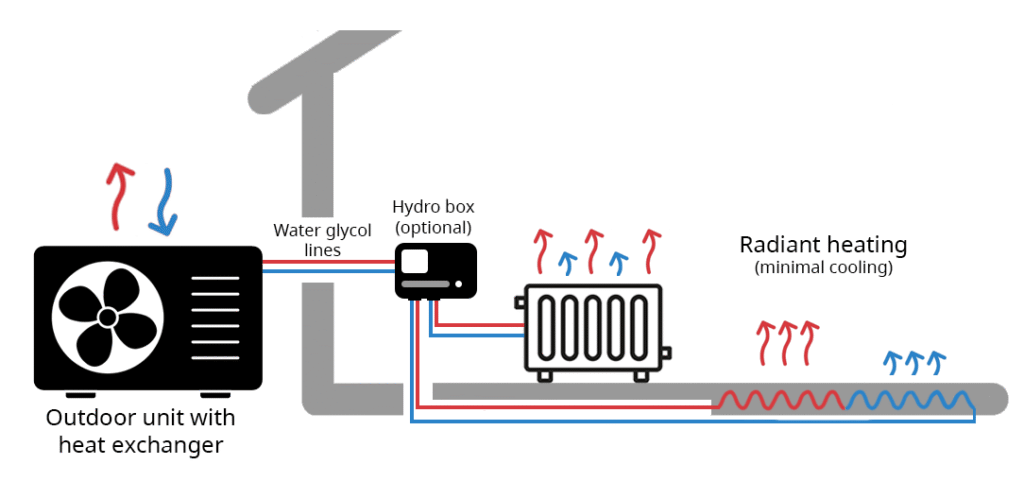
Heating mode:
- Outside air is drawn over a refrigerant coil in the outdoor unit
- Heat from the air warms the refrigerant
- The refrigerant is compressed to increase the temperature
- A heat exchanger in the outdoor unit transfers the heat from the refrigerant to the water glycol mix in a closed loop hydronic system
- Most systems use an indoor hydro box (also known as a flow control box) for controlling the flow of water glycol mix to each zone
- Your hydronic system warms your radiators and in-floor heating
Cooling mode:
- Radiant slab cooling is possible, but its cooling output is limited and there is potential for water to condense and form mold
- Typically, a separate indoor fan coil unit (similar to a mini-split heat pump) is used for cooling
-
Building envelope
The building envelope is the physical barrier separating your home’s interior from the outside. It includes the roof, walls, foundation, windows, and doors. When your building envelope functions well, it allows you to control heat, air, moisture, and light in your home. It is critical for energy efficiency, comfort and durability.
-
Central ducted heat pump
A central ducted heat pump distributes warm and cool air through ductwork in your walls, ceilings or floors. A single central thermostat controls the temperature.
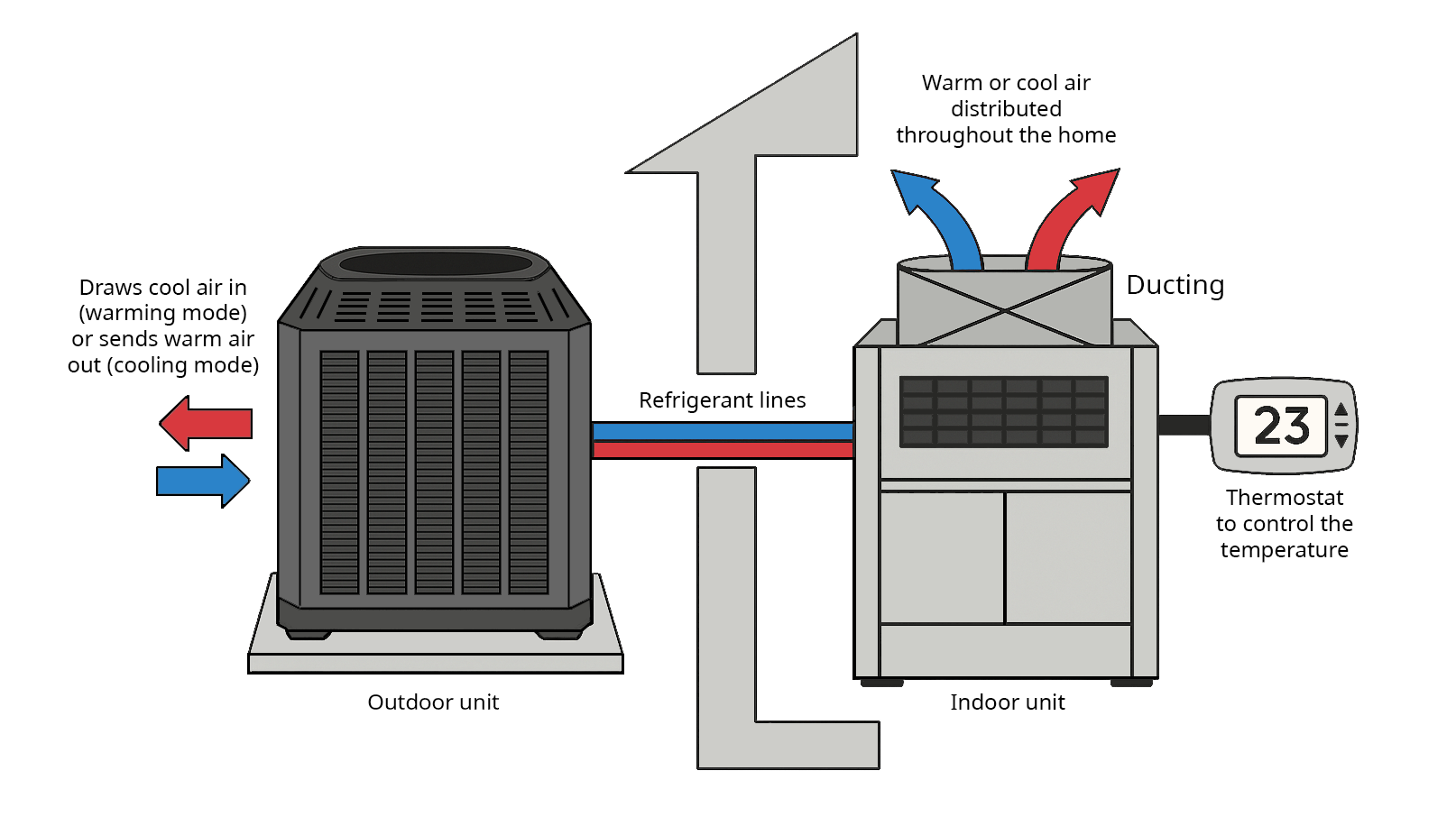
Heating mode:
- Outside air is drawn over a refrigerant coil in the outdoor unit
- Heat from the air warms the refrigerant in the coil
- The refrigerant is compressed into a hot, high-pressure vapour
- Lines bring the vapourized refrigerant into your house to the indoor unit (also known as an air handler)
- In the indoor unit, the vapourized refrigerant passes through another coil where the heat is pulled out and mixed with the indoor air
- A fan sends the warm air around your home in your ducting and vents
Cooling mode is a reverse of heating mode:
- The indoor unit pulls heat from the indoor air and carries it outside through the refrigerant lines
- A fan sends the cooled air around your home in your ducting and vents
-
Combined heat and hot water
A combined system provides both radiant space heating and hot water heating for your home. Like air-to-water (hydronic) systems, combined systems are most suitable for new construction or for homes with an existing boiler and radiant heating system.
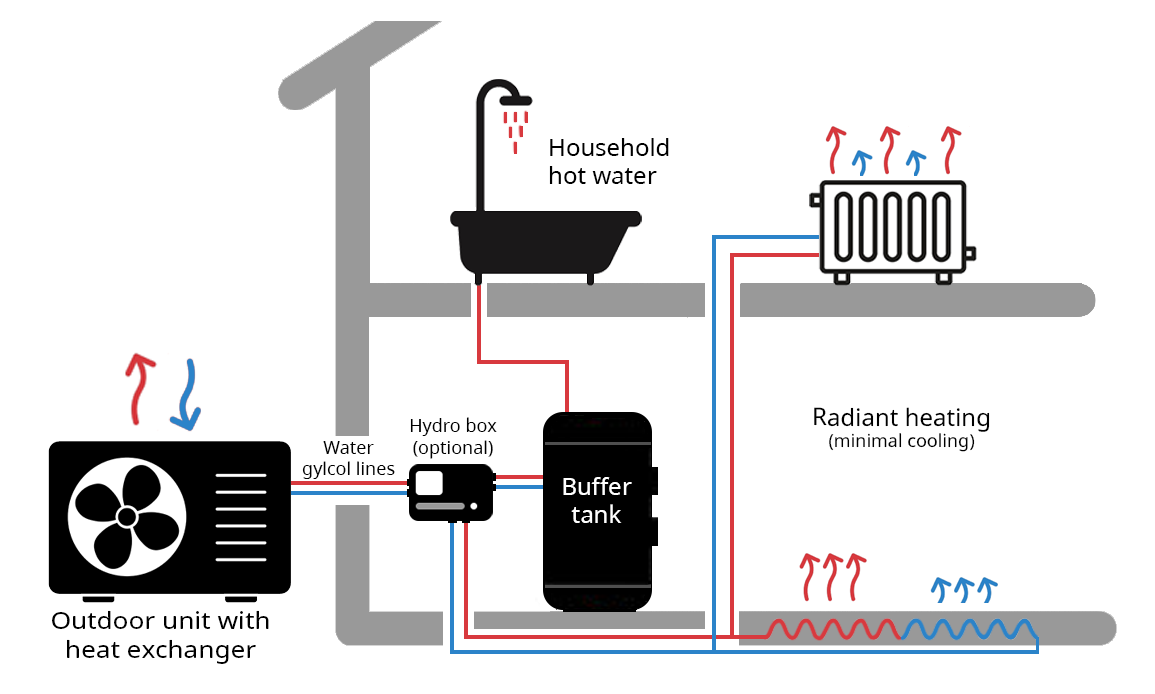
Heating mode:
- Outside air is drawn over a refrigerant coil in the outdoor unit
- Heat from the air warms the refrigerant
- The refrigerant is compressed to increase the temperature
- A heat exchanger in the outdoor unit transfers the heat from the refrigerant to the water glycol mix in a closed loop hydronic system
- Most systems use an indoor hydro box (also known as a flow control box) for controlling the flow of water glycol mix to each zone
- Your hydronic system warms your radiators, in-floor heating, and heats the water in your buffer tank
Cooling mode is a reverse of heating mode:
- Radiant slab cooling is possible, but its cooling output is limited and there is potential for water to condense and form mold
- Typically, a separate indoor fan coil unit (similar to a mini-split heat pump) is used for cooling
-
Dual fuel central ducted heat pump
A dual fuel central ducted heat pump distributes warm and cool air through ductwork in your walls, ceilings or floors. A single central thermostat controls the temperature. A back-up heat source helps during very cold weather.
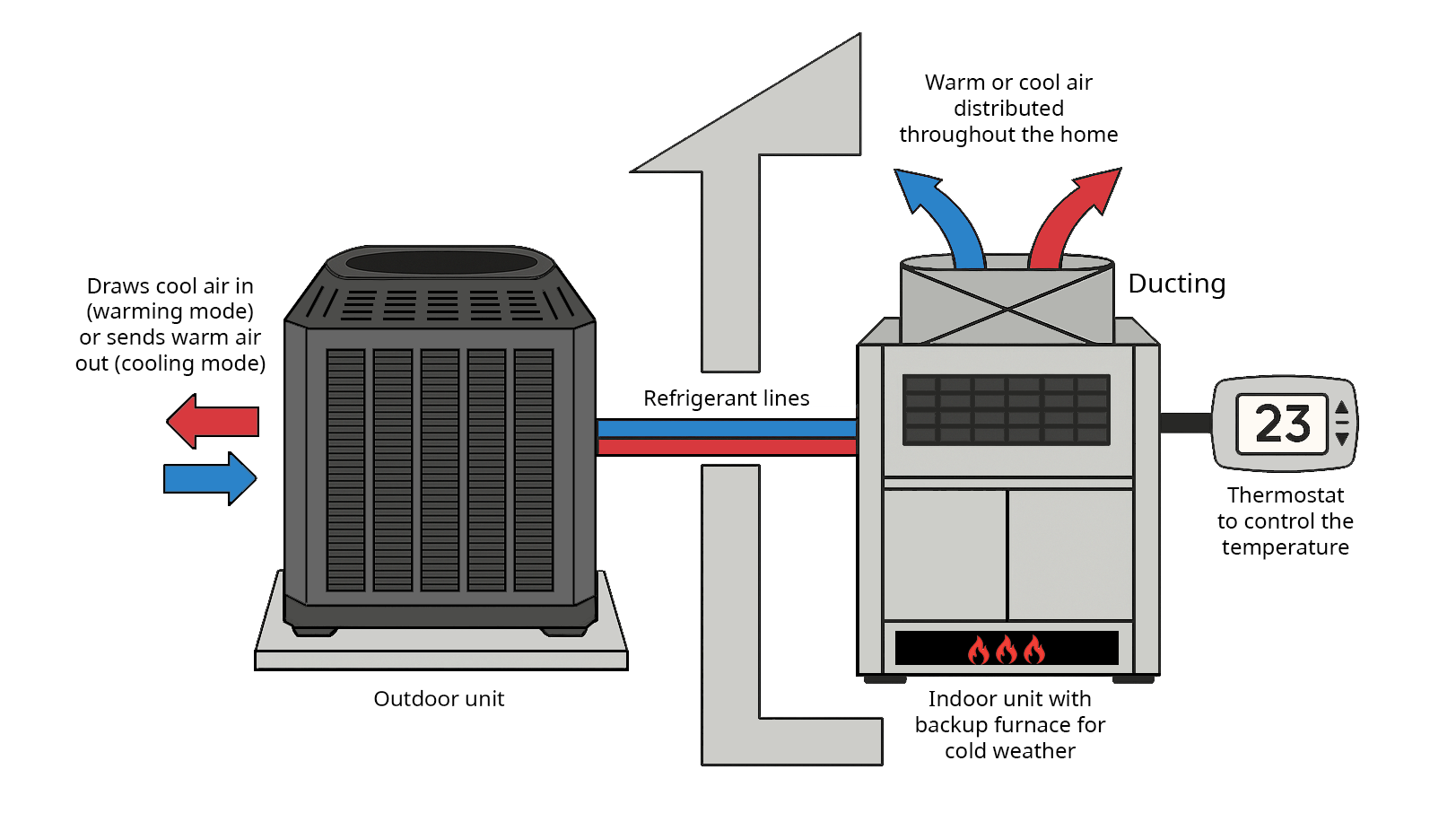
Heating mode:
- Outside air is drawn over a refrigerant coil in the outdoor unit
- Heat from the air warms the refrigerant in the coil
- The refrigerant is compressed into a hot, high-pressure vapour
- Lines bring the vapourized refrigerant into your house to the indoor unit (also known as an air handler)
- In the indoor unit, the vapourized refrigerant passes through another coil where the heat is pulled out and mixed with the indoor air
- A fan sends the warm air around your home in your ducting and vents
- At a pre-set temperature, a back-up furnace turns onto supplement the heating
Cooling mode is a reverse of heating mode:
- The indoor unit pulls heat from the indoor air and carries it outside through the refrigerant lines
- A fan sends the cooled air around your home in your ducting and vents
-
Ground-oriented homes
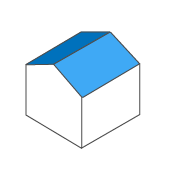
Single-family home
Also known as a detached dwelling. This is a standalone house, not attached to any other buildings.
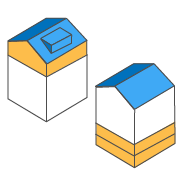
Secondary suite in a single-family home
A secondary suite in a detached dwelling with its own natural gas and/or electricity meter.
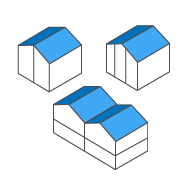
Duplex, triplex or 4-5 unit multiplex
A building with 2-5 residential units that share one or more walls. Each unit has its own entrance and natural gas and/or electricity meter.
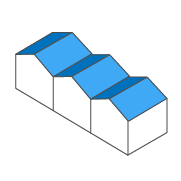
Row or side-by-side townhome
Units that share one or more walls with adjacent units. Each unit has its own entrance and natural gas and/or electricity meter.
Mobile or manufactured home
A mobile home that sits on a permanent foundation. It must be structurally complete with plumbing, heating, electrical, water and sewer services connected. The home’s towing apparatus and axle must be removed.
If you are unsure what home type yours is, please contact an Energy Coach for help.
-
Heat load calculation
A heat load calculation ensures the heat pump is sized appropriately for the home’s heating load.
Required for: dual fuel ducted heat pump rebates (a copy of the load calculation is required for your dual fuel rebate)
Recommended for: all heat pump installations
Contractors or Energy Advisors can perform the heat load calculation using:
- Methodology from TECA’s Quality First Forced Air Guidelines (5th edition 2008) HRAI Residential Heat Loss & Heat Gain technical manual in combination with the Microsoft Excel-based spreadsheets supplied with the CAN/CSA F280-12 standard
- Software that uses the CAN/CSA F280-12 calculation methodology. Recommended options include:
- TECA’s Quality First software
- Right-F280
- EnerGuide HOT2000 Full House Report – Pre-Upgrade EnerGuide Evaluation (must be submitted to Natural Resources Canada)
- Software or a worksheet that uses:
- CAN/CSA F280-90 calculation methodology
- Methodology from Air Conditioning Contractors of America (ACCA) Manual J
Eligible documentation for your rebate application:
- Submittal sheet from compliant software
- Load calculation worksheet from TECA, HRAI, ACCA or the CSA F280 standard
If you’re unsure if your current heat load calculation methodology meets these criteria, please contact betterhomesbc@gov.bc.ca.
-
Heat recovery ventilator
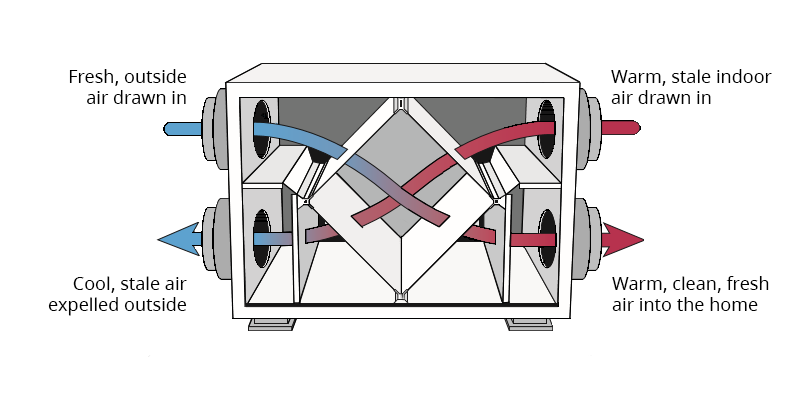
Heat recovery ventilators (HRVs) and energy recovery ventilators (ERVs) are whole home mechanical ventilation systems. They use a heat exchanger and a series of ducts and fans to blow stale air outside and bring filtered fresh air inside. Both systems reduce heat loss by transferring heat from the outgoing stale air to warm up the incoming fresh air. An ERV also transfers humidity between the incoming and outgoing air.
-
HSPF
Heating Seasonal Performance Factor (HSPF) measures the heating efficiency of an air source heat pump. A unit’s HSPF is the total heat output divided by the electricity consumed over a heating season. A higher HSPF means the unit is more energy efficient. HSPF2 is the updated standard, introduced in 2023.
-
Metric U-factor
U-factor is a measure of how easily heat flows through a building element, like a window, wall, roof or door. Metric U-factor is measured in watts per square meter per Kelvin (W/ m2·K).
U-factor can be expressed in metric units (W/m2·K) or imperial inch-pound units (Btu/h·ft2·F). To convert imperial U-factor to metric, multiply the imperial number by 5.678. A lower U-factor is better. It means more resistance to heat flow, better insulating value and better energy efficiency.
-
Mini-split heat pump
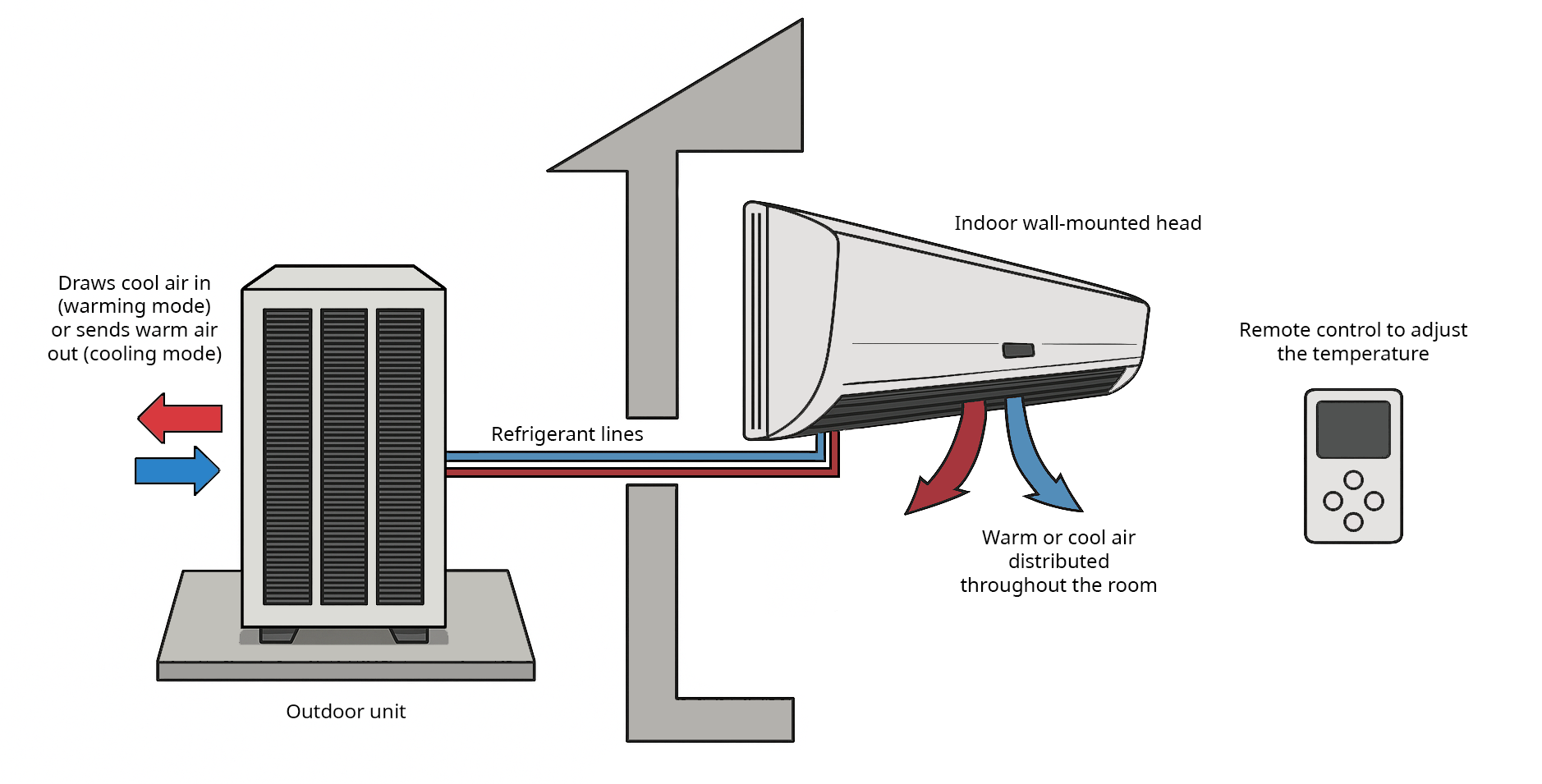
A mini-split heat pump has a single indoor head that is typically mounted on a wall. It serves a single room or open space and is controlled with a remote.
Heating mode:
- Outside air is drawn over a refrigerant coil in the outdoor unit
- Heat from the air warms the refrigerant in the coil
- The refrigerant is compressed into a hot, high-pressure vapour
- Lines bring the vapourized refrigerant into your house to the indoor unit (also known as an air handler)
- In the indoor unit, the vapourized refrigerant passes through another coil where the heat is pulled out and mixed with the indoor air
- A fan sends the warm air into the room
Cooling mode is a reverse of heating mode:
- The indoor unit pulls heat from the indoor air and carries it outside through the refrigerant lines
- A fan sends the cooled air into your room
-
Multi-split heat pump
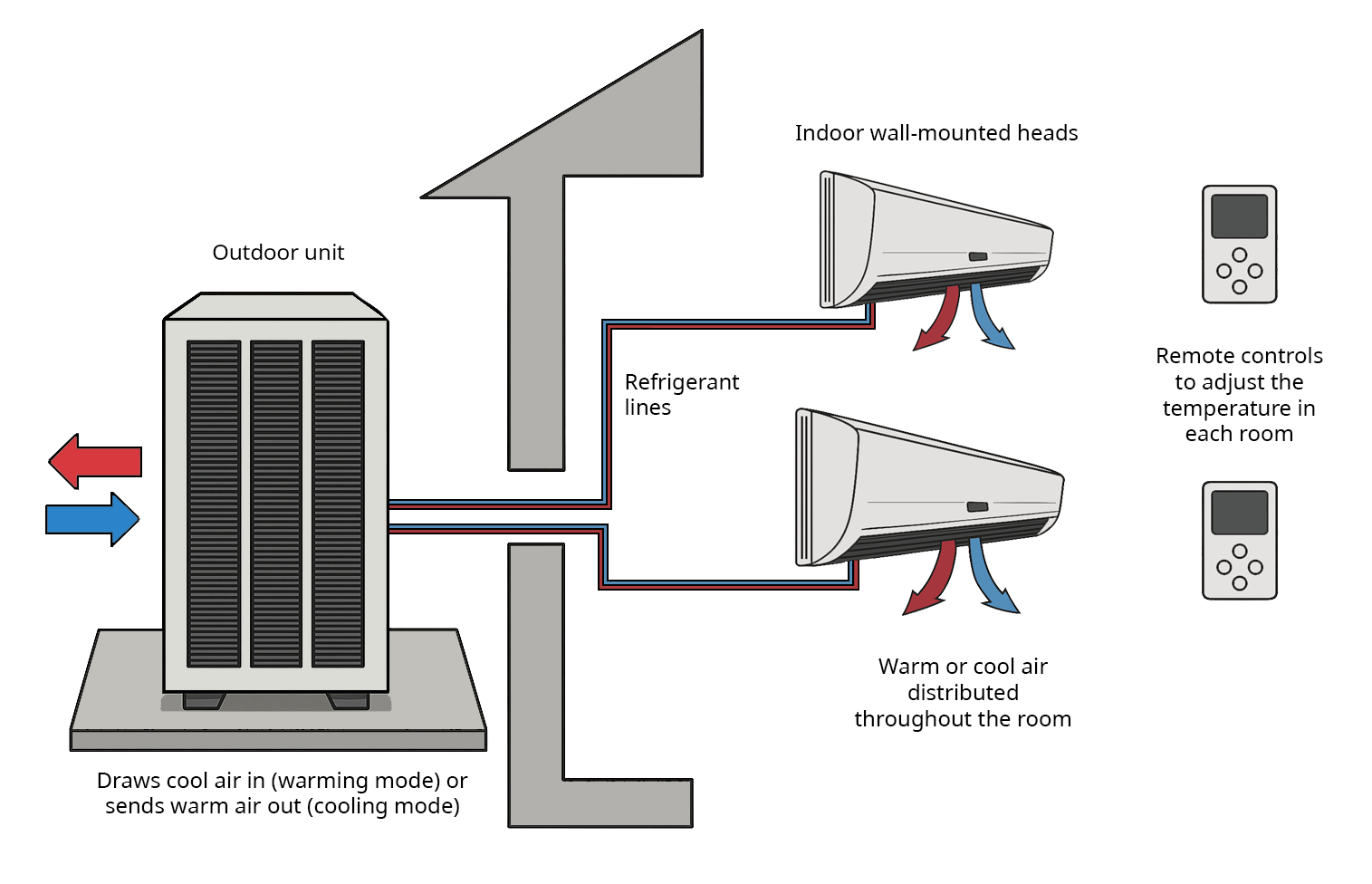
A multi-split heat pump has two or more indoor heads in different rooms around the home. Each head has its own remote for temperature control.
Heating mode:
- Outside air is drawn over a refrigerant coil in the outdoor unit
- Heat from the air warms the refrigerant in the coil
- The refrigerant is compressed into a hot, high-pressure vapour
- Multiple lines bring the vapourized refrigerant into your house to each of the indoor units (also known as air handlers)
- In each indoor unit, the vapourized refrigerant passes through another coil where the heat is pulled out and mixed with the indoor air
- A fan sends the warm air into the room
Cooling mode is a reverse of heating mode:
- Fans in the indoor units send the cooled air into your rooms
- The indoor units pull heat from the indoor air and carry it outside through the refrigerant lines
-
Multi-unit residential buildings
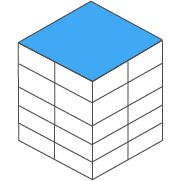
Apartment, condo or stacked townhouse building (6 storeys or less)
Includes market rental, strata condominium and equity co-op buildings. Also includes residential units in mixed-use buildings with one or more rental or strata condominium residential suites. Must have shared common area lighting and heating, and shared hallways or elevator.
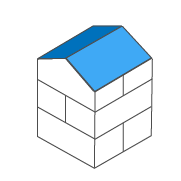
Stacked or partially stacked townhome
Townhome building with one unit stacked or partially stacked on top of another. Each unit has its own front entrance and there are no shared hallways or elevators.
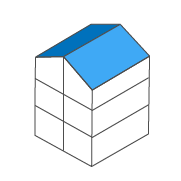
Multiplex with six or more units
Building with at least 6 residential units. Each unit has its own front entrance and there are no shared internal corridors.
If you are unsure what home type yours is, please contact an Energy Coach for help.
-
Municipal utilities
BC Hydro and FortisBC are the two largest utilities providing services to B.C. residents, and are regulated by the B.C. Utilities Commission (BCUC).
Although BC Hydro and FortisBC are the main public utilities in B.C., there are five B.C. municipalities that have their own utilities and sell electricity directly to their customers.
-
R-value
Thermal Resistance Value (R-value) is an imperial system measure of a material’s resistance to heat flow by conduction. The higher the resistance value, the slower the rate of heat transfer through the material. Insulation materials are measured in R-Value. To convert an R-Value to an RSI Value (metric system), divide the R-value by 5.678.
-
SEER
Seasonal Energy Efficiency Ratio (SEER) measures the cooling efficiency of an air conditioner or air source heat pump. A unit’s SEER is the cooling output divided by the total electricity consumed over a cooling season. A higher SEER rating means the unit is more energy efficient. SEER2 is the updated standard, introduced in 2023.
-
Window and door certification bodies